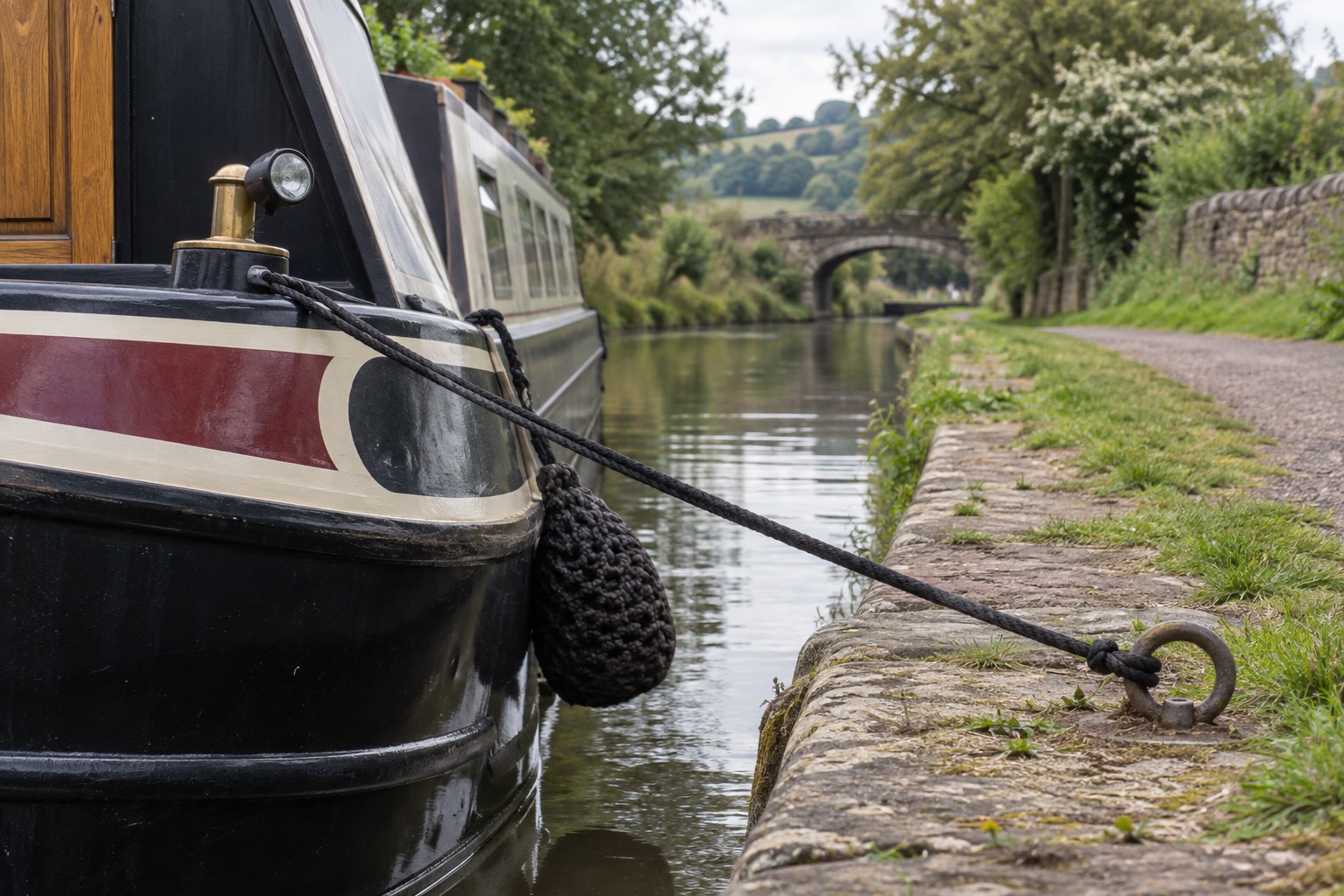
Bring the boat alongside slowly
Agree the crew’s jobs before approaching. Stop the boat before anyone steps ashore with a rope; do not jump the gap. Keep one end secured aboard and loose rope away from the propeller. On a river, follow the local mooring instructions and secure the upstream line first.
Set the bow and stern lines
Choose sound rings or bollards just beyond each end of the boat. Lead the ropes outwards at roughly 45 degrees, return them aboard and secure them without pulling them rigid. Leave enough slack for changing levels: a falling river can leave a tightly tied boat hanging from the bank. Extra lines called springs can reduce forward and backward movement; use the handbook’s illustrations to understand the arrangement.
Check pins and the towpath
Use pins only where permitted and the ground is suitable. Check bank stability and signs of buried services before hammering; do not drive pins into hard surfaces. Make pins visible and never run ropes across the towpath. Check the boat and lines again after passing traffic or a change in conditions.
Before you go
- Inspect rings or permitted pins
- Allow for water-level changes
- Keep lines off the towpath