Check the whole route fits
Record the boat's length, beam, draught and air draught, including roof equipment. Compare them with every waterway and structure on the route, not just the departure marina. Published limits are guidance: water levels and the boat's profile can affect clearance. Ask the navigation authority about uncertain or close limits before committing.
Check notices and bookings together
Read the responsible authority's current notices for every stretch and for both outward and return dates. Record closures, operating windows and any booking you need. An open waterway may still contain a lock or tunnel with limited passage times. Keep the booking confirmation and arrival instructions with the plan.
Plan stops before you need them
Choose a possible overnight stop, an earlier alternative and a suitable turning place for an out-and-back trip. Check water, fuel and the right waste-disposal facility, including access and current availability. A map marker does not confirm that a service works or that a berth is available.
Write a trip brief
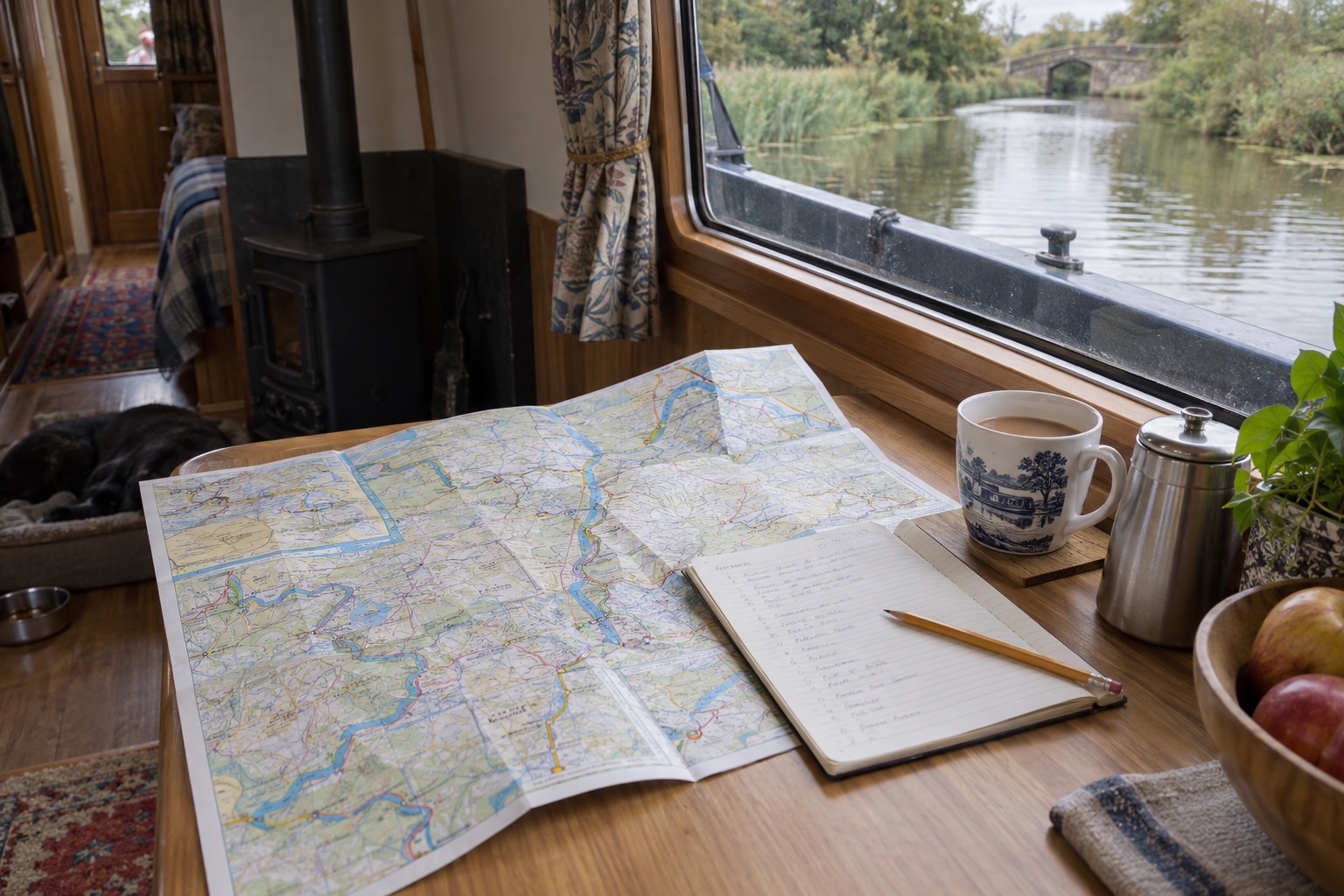
Keep the decisions together in a notebook or a note on your phone. These prompts turn separate checks into something the crew can refer to. Save the relevant information before leaving reliable reception, then recheck anything that can change.
| Record | What to write down |
|---|---|
| Journey and dates | Start, destination, waterways, outward and return dates, and the authority for each stretch. |
| Boat and limits | Measured length, beam, draught and air draught; the limiting structures; any clearance still needing confirmation. |
| Notices and passage | Notice links and when you checked them, affected dates, operating hours, booking reference and arrival instructions. |
| Time available | Your cruising allowance, locks, bridges, booked passages, breaks and daylight. Leave room for delays. |
| Services and stops | Water, fuel, suitable waste disposal, main overnight stop, earlier stop and turning place. Note what remains unconfirmed. |
| Decision to change | When you will shorten or abandon the leg, where you can stop safely, and who needs the revised plan. |
A blank or an unconfirmed restriction is a question to settle, not an assumption that the route is usable. Our guide to estimating a canal cruising day explains the time calculation. Use the stoppage-checking steps to read the notices behind this brief.
Work through a change of plan
Imagine an out-and-back weekend trip. Your preferred overnight stop lies beyond a lock flight. While checking the return date, you find a closure affecting that flight. This is a hypothetical example, not a current notice for a named waterway.
Do not keep the overnight destination and hope to get back through. First check whether there is a suitable turning place and lawful stopping option before the closure. If there is, work out whether that shorter trip suits the boat and crew. If there is not, choose another trip or postpone. Recheck any passage booking affected by the change.
Apply the same thinking to supplies. If your planned water point is unavailable, confirm an alternative you can reach with the water aboard. For Trust facilities, check temporary disruptions in the notices and permanent changes on its closed-facilities page. Ask the operator about any remaining uncertainty.
Use the planner alongside the checks
Open Cut Along's journey planner to explore connected mapped waterways and an estimated travel time. Choose your points, then adjust the cruising speed and allowance per lock to suit your planning assumptions. Copy the useful details into your brief.
The route network and mapped lock areas are provisional. The planner can flag published beam limits where they are recorded, using the width saved in My boat. It does not check length, draught, headroom, passage permissions or live closures. Missing width limits do not confirm clearance. Use the relevant authority's information for those decisions. A calculated route is not confirmation that the boat can make the journey.
Before setting off, revisit the notices, weather, local conditions and anything you left unconfirmed. For river sections, use our guide to river warnings and the responsible authority's current advice. Share the revised plan with the crew and, if appropriate, someone ashore.
From Braunston to Hillmorton: a worked example
Try this in the canal route planner to see how your assumptions affect a day's estimate.
- Choose By boat. Search the starting places for Braunston Water Point and select the result. Compare it with this mapped starting point.
- Search destinations for Hillmorton Water Point. There are two results with that name. For this example, choose the mapped point at 52.36771° N, 1.21281° W. Its OpenStreetMap link opens this OpenStreetMap record.
- Calculate the boat route, then compare the speed and lock allowances below.
Using Cut Along's mapped data on 16 November 2026, the calculation gives about 7.3 water miles and three mapped lock areas.
| Selected assumptions | Calculated time |
|---|---|
| 3 mph and 20 minutes per lock | About 3 hours 25 minutes |
| 2 mph and 30 minutes per lock | About 5 hours 8 minutes |
These are calculated estimates, not timed journeys or arrival promises. Queues, breaks, weather and operating restrictions can add time. Recheck the result if the mapped data changes, then leave room in your day for delays.
Read the width warning. The planner's beam check is incomplete for this example. That does not establish clearance, even if it draws a route. The Trust's dimensions for the North Oxford stretch from Braunston Junction to Hawkesbury Junction list a maximum beam of 2.13 m. Check the full dimensions and your boat's measurements, including length, draught and headroom, before committing to the journey.
The mapped water points identify the ends of this exercise. Their working status and access are unverified. Use the stoppage-checking steps and confirm the facilities and restrictions for your travel dates. This example does not establish that the route is currently open.
Before you go
- Check dimensions, notices and passage bookings
- Write down a main stop and an earlier alternative
- Recheck conditions before departure and the return