Build a time budget
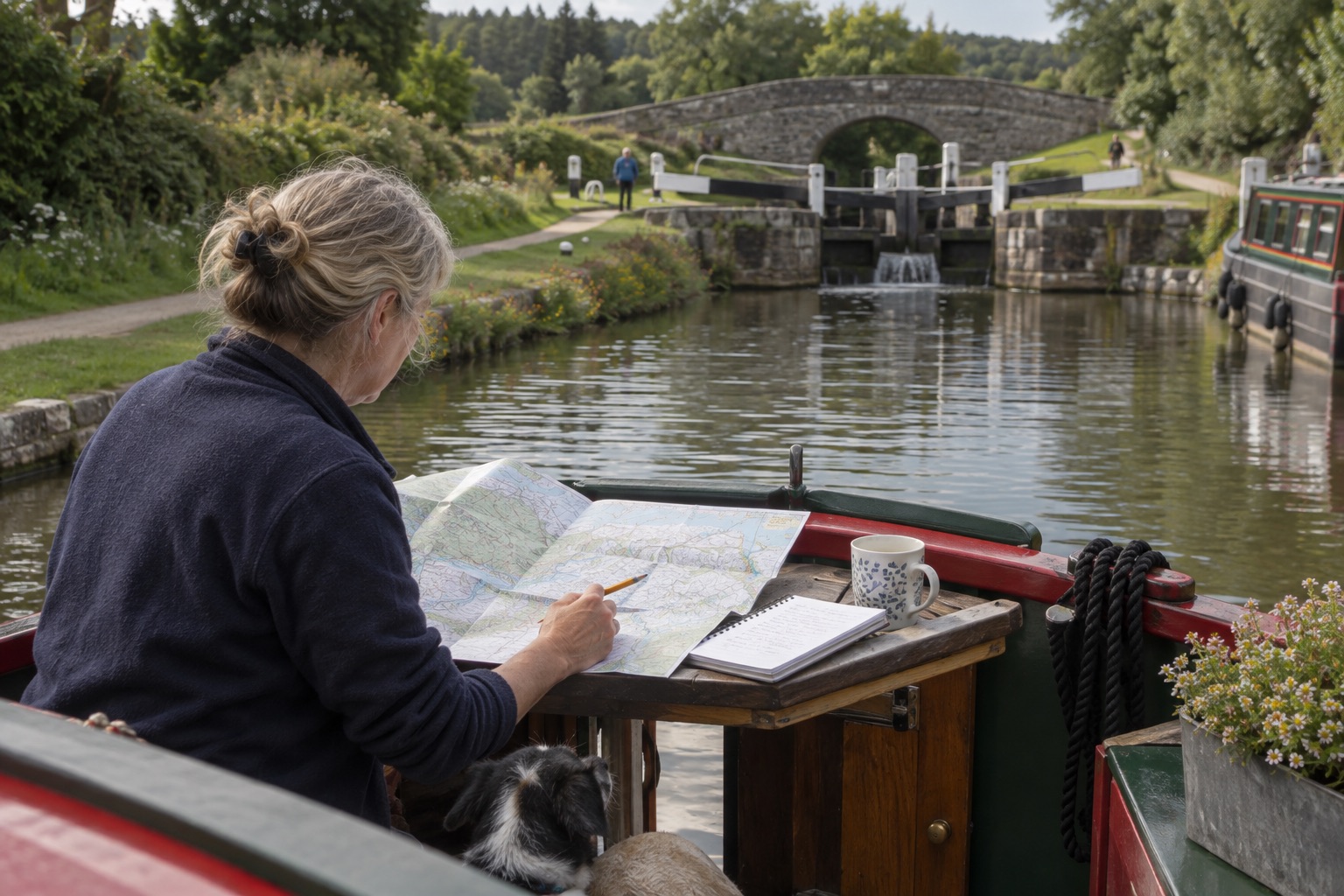
Start with a pace that suits the boat, crew and conditions. As a planning example, six miles at an assumed 3 mph takes two hours; four locks at an assumed 20 minutes each adds one hour and 20 minutes. That makes three hours and 20 minutes before queues, movable bridges, tunnels, water stops or breaks. These are example allowances, not a recommended speed or a promise about lock times. In Cut Along, adjust the boat speed and allowance per lock to explore how the estimate changes. Its mapped lock areas and provisional route data still need checking.
Check the route can be used
Check the navigation authority’s current notices, operating times and booking requirements for the intended date. Confirm the boat’s dimensions against the waterways on your route. A line on a map does not confirm clearance or permission to pass. Cut Along does not check boat dimensions or passage permissions and does not have a live notice feed. For a route crossing authorities, check each authority’s information, not just the Canal & River Trust notices.
Keep a second stopping place
Choose an earlier mooring and a later option, allowing for daylight, the crew and time to tie up. If the first lock takes longer than expected, shorten the day rather than trying to recover time by rushing. An out-and-back trip also needs a suitable turning place and enough time for the return. Check the proposed stops and turning space locally; a mapped facility or mooring is not a guarantee of availability.
Before you go
- Count locks and movable bridges
- Check today's notices
- Mark an earlier overnight stop
Before setting off, follow the steps for checking waterway stoppages and the canal route checklist.