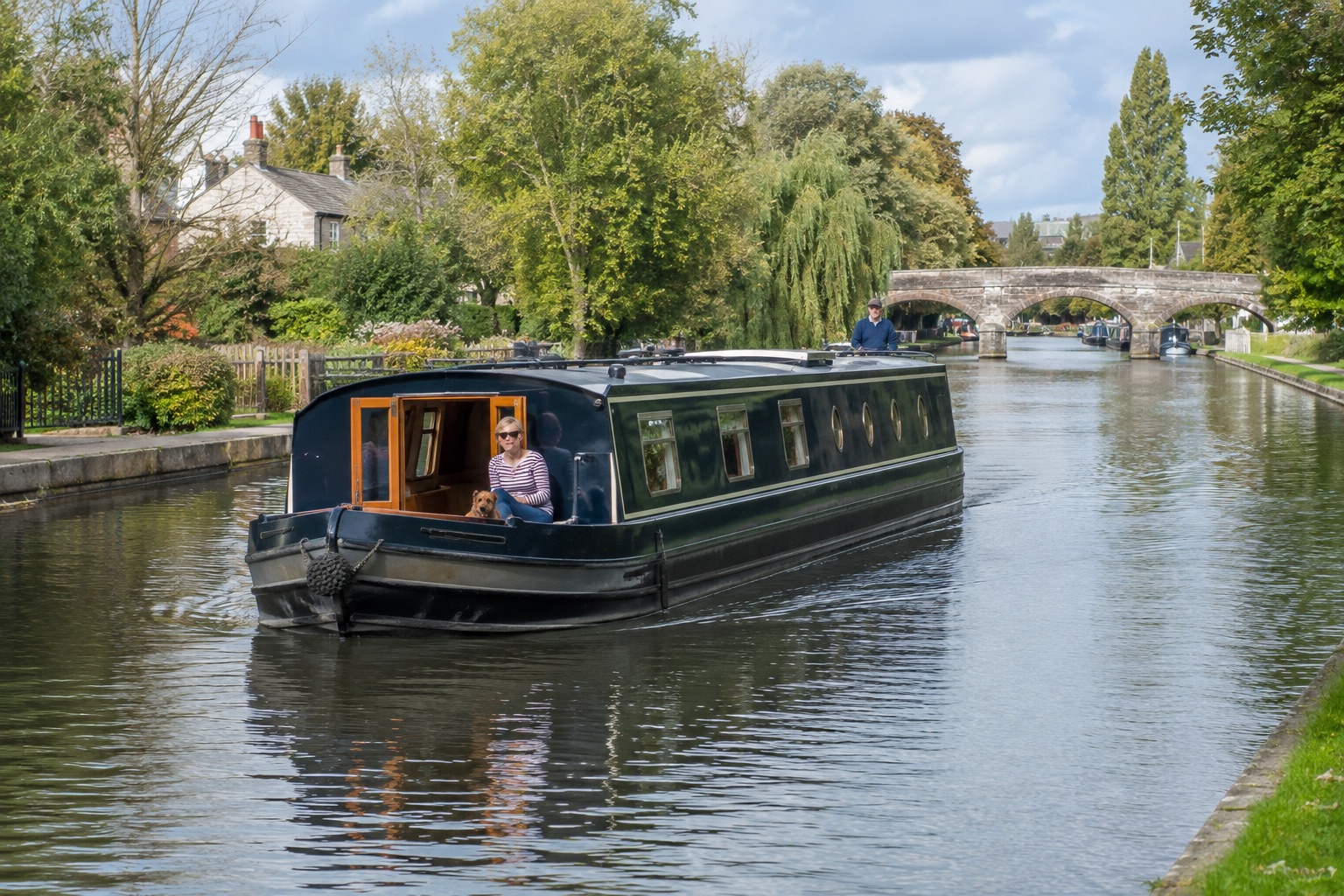
Measure the travelling profile
Record the beam at the boat's widest point, overall length, draught and air draught with roof gear in its travelling position. The widest point may be below the waterline. If a measurement is uncertain or close to a published limit, check it before setting off; water levels can change headroom and depth.
Check each section, not just the canal name
Use the current dimensions from every navigation authority on your route. The Chesterfield Canal shows why: Canal & River Trust lists a broad entrance from the River Trent into West Stockwith Basin, but much narrower limits beyond the basin. If your journey joins the Thames, check Environment Agency lock sizes and bridge headways as well.
Leave a way to stop or turn
Check current restrictions and mark a stopping or turning place before each uncertain stretch. A wide, flat hull may have less depth near the bank than in the main channel. Ask the authority about close clearances and passage arrangements. Cut Along's planner can show a route, but it does not check boat dimensions or passage permissions.
Before you go
- Measure the actual beam
- Check every link in the route
- Find suitable turning and mooring places