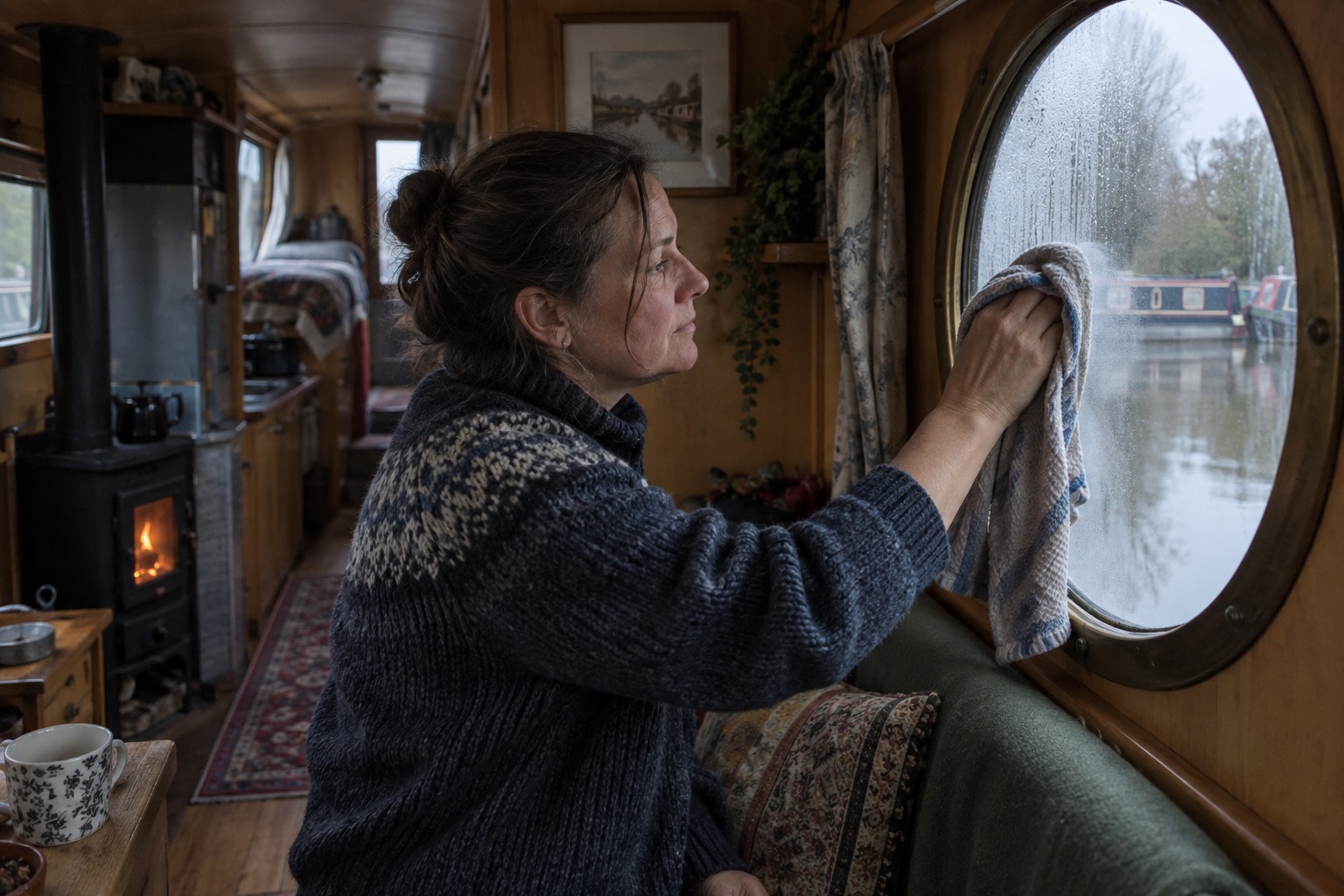
Check where the water comes from
Condensation forms when moist cabin air meets a cold surface. Cooking, washing, breathing and drying wet clothes all add moisture. Check windows, roof fittings and plumbing for leaks too. Dry a small patch and note when it returns: water appearing after rain needs a different investigation from droplets across cold windows after cooking.
Let moist air escape safely
Ventilate while cooking, washing or drying clothes, using opening windows or suitable extractors alongside the boat’s fixed ventilation. For example, after a wet day, hang damp coats where air can circulate and remove collected window water rather than leaving both in a closed cabin overnight. Keep roof vents and low-level grilles clear of dust, leaves, bedding and stored bags. Never cover them to stop a draught. Fuel-burning appliances need a reliable air supply; follow the Boat Safety Scheme’s advice and have the ventilation assessed if you change an appliance.
Dry and inspect hidden spaces
Wipe or collect window water before it soaks into timber and fabrics. Check window drainage openings. Air out mattresses and cupboards, and leave space for air to move behind furniture against cold hull sides. Insulation or secondary glazing may help with cold surfaces, but must not obstruct ventilation. Persistent mould, wet insulation or water returning despite these checks needs investigation by a suitable marine specialist before you cover it with a new lining.
Before you go
- Rule out leaks first
- Ventilate while cooking
- Check hidden cupboards