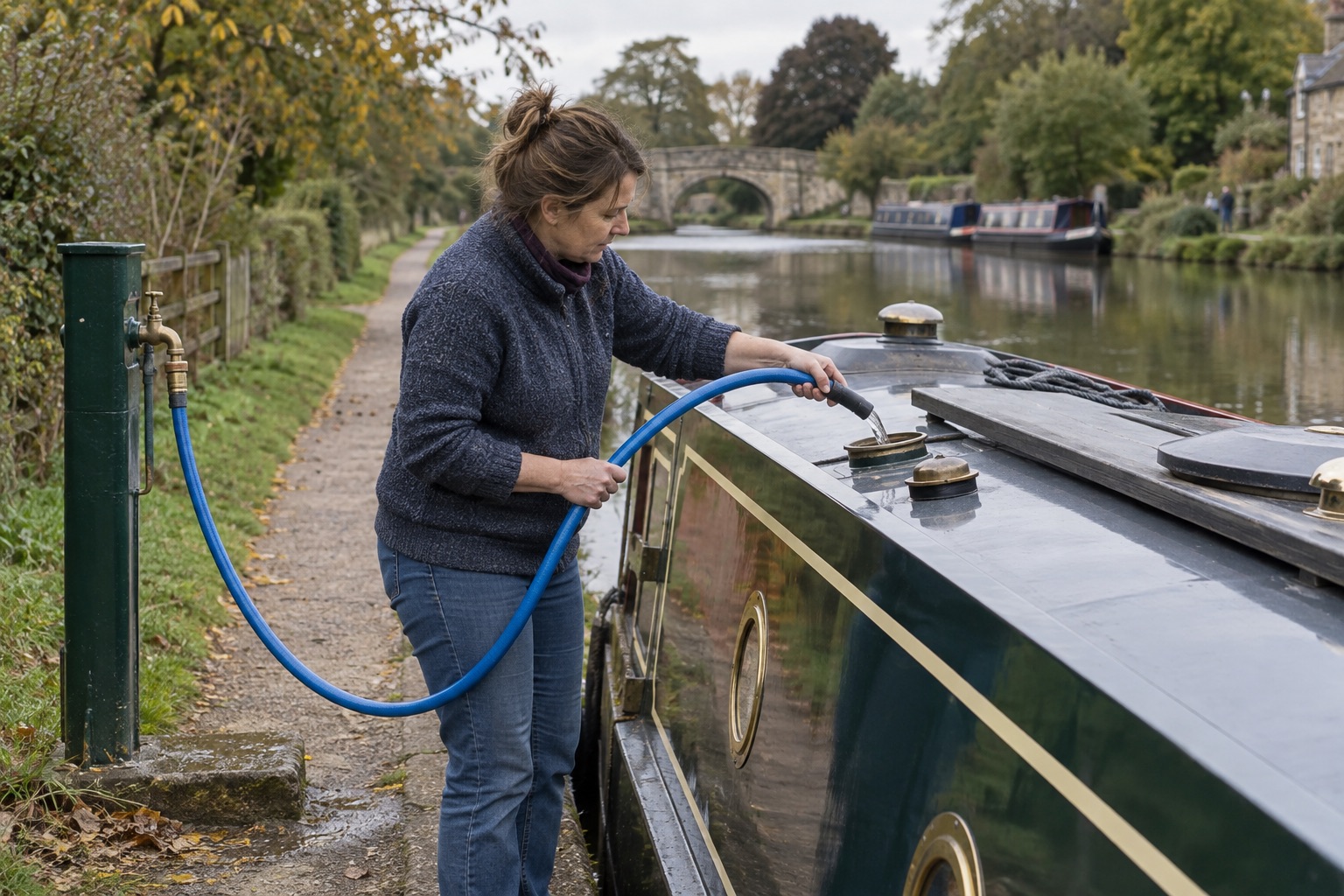
Keep the filling hose clean
Use a hose intended for drinking water and keep its ends away from the canal, puddles and contaminated ground. Drain it after filling and store it in a sealed container. Use the designated potable-water tap, not a hose provided for toilet disposal or cleaning. Disconnect when filling is finished; the Trust does not permit hoses to be left as a permanent connection to a boat.
Match cleaning to the tank
Find out whether your tank is plastic, stainless steel or mild steel, and check the tank and water-system instructions before choosing a cleaning product. The Trust’s maintenance guidance describes different cleaning methods for each material. Do not improvise a chemical dose or contact time. Follow the product instructions and flush as directed. Keep a note of cleaning and filter changes; fitting a filter does not remove the need to maintain the tank.
Check leaks and prepare for frost
Know where the pump switch and isolation valves are. If the pump runs when no tap is open, check accessible joints and pipes for leaks rather than assuming the pump itself has failed. Follow the boat and equipment makers’ winter procedure before leaving it unused. Tanks, pumps, heaters and exposed pipes may need draining or frost protection. An occupied boat still needs attention to cold spaces and exposed runs.
Before you go
- Store the drinking hose clean
- Know the pump isolation point
- Follow a frost routine