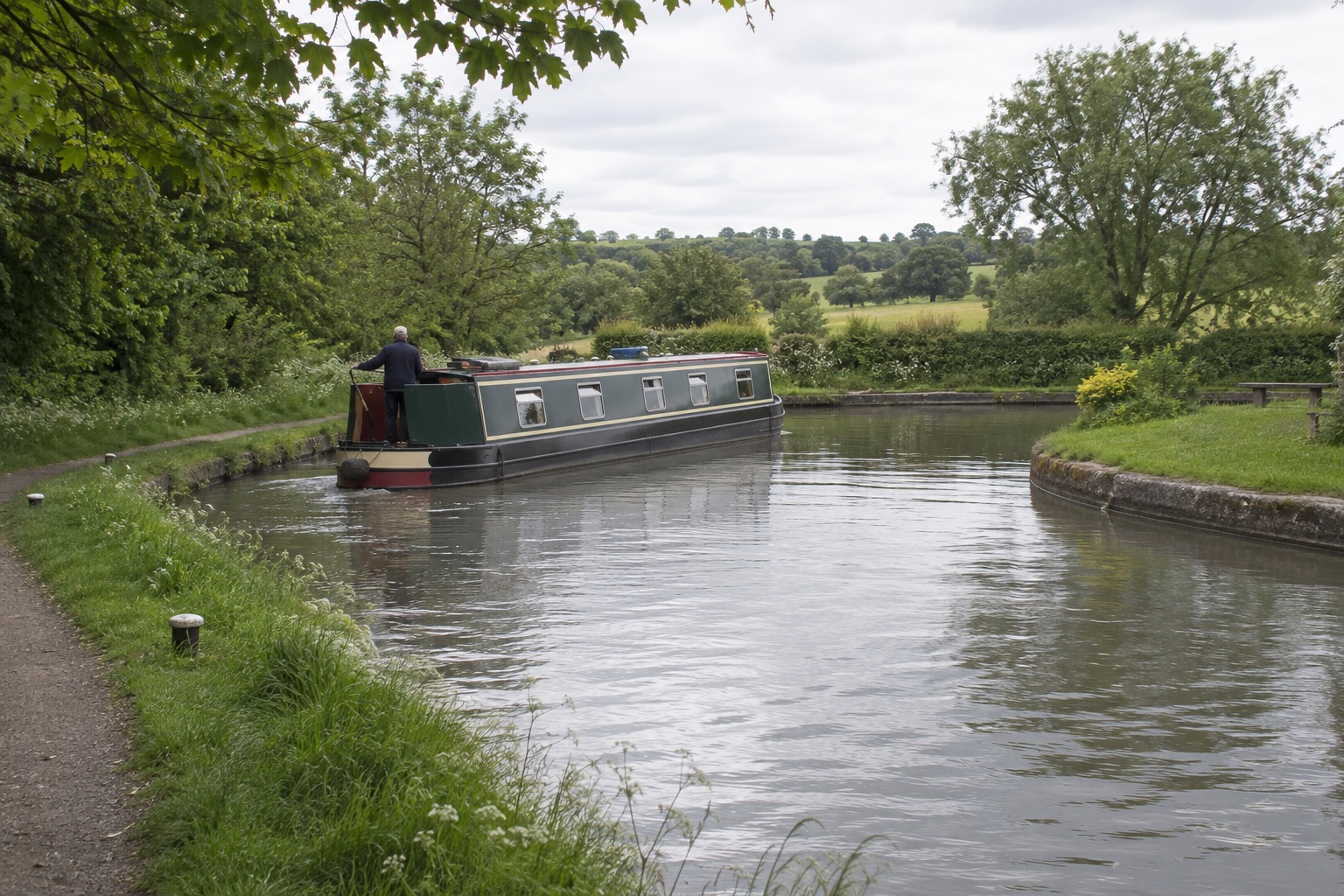
Check the space first
Find the winding hole on a current waterway map, then look at its depth, shape, nearby boats and passing traffic. Check that your whole boat can turn there. Do not assume a side arm is a public turning place, and keep crew clear of the gap between boat and bank.
Bring the boat round slowly
Many canal winding holes have a V-shaped recess. Approach at low speed and bring the bow gently into the recess. With the bow held there, use forward gear carefully to swing the stern round. On some boats or in a tight space, a pole can help from a safe position. Allow for wind and flow, and never use your hands or feet to fend off the bank.
Reverse clear and look again
Once the boat has turned far enough, use reverse to draw the bow away from the bank. Watch for shallow water at the towpath edge, then regain forward steerage when there is room. Check both directions before moving on. If the turn is not working, stop and reassess rather than adding power blindly.
Before you go
- Confirm the turning space
- Look for traffic and wind
- Pause after turning