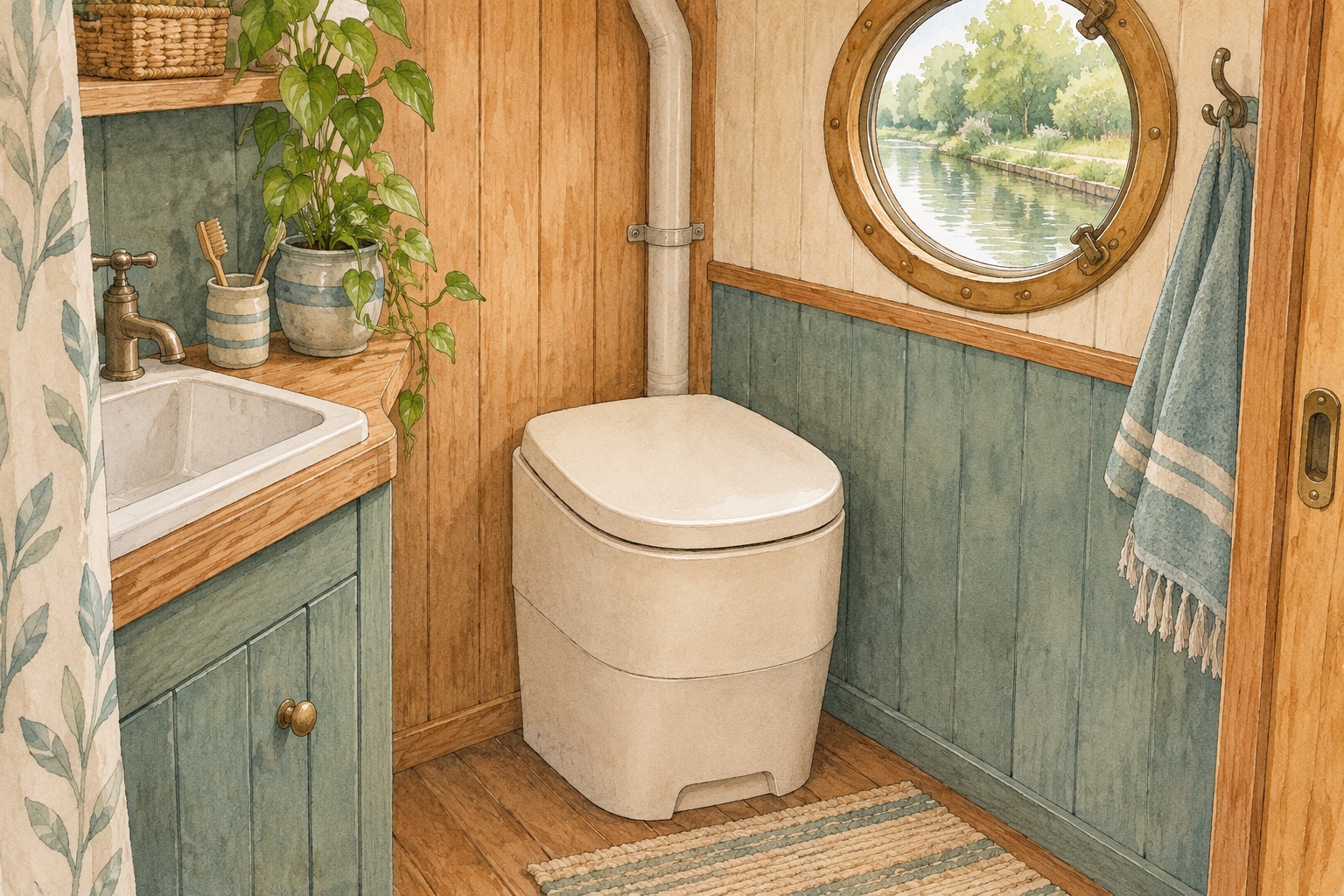
Understand what the toilet does
Most boat toilets sold as composting toilets separate urine from solids and collect them in different containers. They do not produce finished compost in the bathroom. Some dry the contents or use a mixing mechanism, but you still need a plan for processing or disposal after emptying.
Decide where the waste will go
Before ordering, confirm an accepted route for separated urine and another for the solids. Canal & River Trust guidance identifies an Elsan as an option for urine, but asks boaters to keep separator solids out of its bins and warns that they can block Elsan and pump-out equipment.
Choose for the life you lead aboard
A couple living aboard throughout the year needs a different routine from occasional weekend visitors. Think about carrying full containers, storing spares, powering any fan and reaching your disposal arrangement as you cruise. The right toilet is one you can manage on an ordinary wet winter day.
Compare the three toilet systems
Every boat toilet leaves you with waste to manage. The useful comparison is how you will store it, carry it and reach the right disposal point throughout your usual cruising year.
| System | What you handle | What you need ashore |
|---|---|---|
| Separating dry toilet | A urine bottle or tank and a separate solids container. Some units use a powered fan, cover material or a mixing mechanism. | An accepted route for urine, plus a separate arrangement for solids: a suitable composting system or a collection service that accepts them. |
| Cassette | A removable tank containing mixed toilet waste and, depending on the model, flush water and an approved additive. | A suitable Elsan or other designated chemical-toilet disposal point. |
| Pump-out | A fixed holding tank. Emptying normally takes place through the boat's pump-out connection. | A working pump-out service you can reach, with the right access and payment arrangements. |
A separating toilet can reduce flushing-water use and reliance on pump-outs. It also gives you two waste streams to look after. If carrying a urine bottle or changing a solids container would be difficult, try those movements with an empty demonstration unit before buying. Our Elsan and pump-out guide explains the other systems.
Choosing and fitting a compost toilet
Measure the bathroom with the door shut, then check room to sit, open the lid and lift out each container. A toilet can fit its floor space while leaving too little room to empty it. Think about the person who will do that job, including their reach, grip and ability to carry a full container through the cabin.
- Separation: check how the bowl diverts urine, how guests will use it and whether a child seat is available if needed.
- Containers: compare usable capacity, handles, caps, replacement availability and the route from bathroom to towpath. Check how bottles are held in position when the boat moves.
- Ventilation: establish whether the unit needs an outside vent, a specified filter or a fan. Plan the full pipe route and access for maintenance before making holes.
- Electricity: check the fan's voltage, rated consumption and required running pattern. Include it in the domestic power budget. A waterless toilet is not necessarily electricity-free.
- Fixing and splash protection: follow the model's mounting instructions and check its suitability for a shower room. A fan or electrical connection may not be waterproof.
- Old equipment: include professional emptying, cleaning and safe decommissioning of the previous tank and pipework in the job. Have unused through-hull fittings assessed by a competent boatyard.
Ask a competent marine installer to check unfamiliar electrical work, penetrations and changes to existing systems. Keep the boat's permanent ventilation clear. A toilet extraction pipe does not replace the ventilation needed elsewhere aboard.
Details differ between models. For example, Simploo's FAQ describes a fan-assisted unit without an agitator and warns against directing shower water at the fan. Use the instructions for the actual toilet you choose, rather than transferring another model's routine to it.
Daily use and cleaning
Explain the separator to everyone using the boat. Show where urine goes, where paper belongs and how any cover or hatch works. Clear instructions spare guests an awkward guess. Use the seat position recommended by the manufacturer so liquid reaches the right compartment.
Follow the model's instructions for cover material, liners and mixing. Some designs use a measured addition of suitable dry material; others do not need it. Adding more sawdust to every toilet is not a universal solution. The composting or collection arrangement must also accept whatever you add.
Keep wipes, sanitary products, nappies and plastic out of the solids container. Check whether toilet paper goes into it or into a separate waste bin. A bag sold as compostable may still be unsuitable for your particular composting process or collection service, so check the specification with whoever receives the material.
Check the urine level frequently while learning the system and empty before the container reaches its limit. Leave capacity for overnight use and visitors. Do not wait for a smell to tell you it is full. Keep a capped spare if the model permits it, stored securely away from food and drinking-water equipment.
Clean the seat, separator and accessible surfaces with products and quantities approved for the unit. Avoid flooding the solids compartment or mixing cleaning chemicals. Keep dedicated cleaning equipment, wear gloves when emptying, cover cuts and wash your hands with soap and water afterwards. Keep waste containers and tools away from galley surfaces.
Carry containers closed and upright, using their proper handles. A washable secondary tray or carrier can help contain a spill. Prepare the replacement container before removing the full one, and check that all parts are seated correctly afterwards.
Where the waste can go
Canal & River Trust bins are not a disposal route for separator-toilet solids. Its published guidance asks boaters to make another arrangement. Bagging the contents, adding sawdust or calling them compost does not change that. Never leave waste beside a bin or dispose of it on the towpath, in a hedge or in the water.
| Material | Practical disposal route |
|---|---|
| Separated urine | The Trust identifies an Elsan as an option. Check the instructions and current status at the facility. Do not use a drinking-water tap, surface-water drain or the canal. |
| Solids and cover material | A suitable, agreed composting arrangement or a specialist service that explicitly accepts this waste. The Trust warns that dry solids and added material can block Elsan and pump-out equipment. |
| Paper and liners | Follow the receiving system's acceptance rules. Keep rejected items separate and ask the operator about their disposal. |
These distinctions come from the Trust's separator-toilet guidance. Other navigation authorities, marinas and waste operators may have different arrangements. Ask them directly before relying on a facility. A household bin, recycling centre or marina compost heap should never be assumed to accept toilet waste.
For a collection service, confirm the exact cruising area, collection frequency, accepted cover material, required bags and containers, charges and missed-collection procedure. The Trust describes a London collection service, but that does not establish availability at your boat. Contact the operator before buying a toilet or planning a journey around it.
Write down a fallback for a closed Elsan, delayed collection or time away from your usual composting site. If you cannot store the waste safely until an accepted disposal option is available, change the arrangement before continuing to use the toilet.
What proper composting involves
Separating and drying waste makes collection manageable. Composting is a further biological process that needs suitable material, moisture, oxygen, time and active management. A closed bucket of recent deposits remains toilet waste.
Before composting yourself, establish an appropriate site with the landowner's agreement and check any requirements with the relevant local authority or environmental regulator. A garden, mooring or spare patch of bank is not automatically suitable. This matters particularly if you intend to receive other people's waste.
Plan the whole cycle
You need room for incoming material and for older material to finish processing. Decide how batches will be kept separate, labelled and dated, including the last addition. Repeatedly topping up a container with fresh waste prevents you treating all its contents as an old batch. Plan containment so material and liquid cannot escape into the water or onto neighbouring ground, and keep children and animals away.
The Trust's cold-composting case study shows a land-based arrangement with several bins in rotation. That is a useful reminder of the space required beyond the bathroom. For a continuously cruising boat, access to that site must remain practical as you move.
Cold and hot systems need different management
Cold composting relies on a long processing and maturation period. Hot composting manages microbial activity and retained heat, with monitoring and a suitable balance of materials. The Trust's hot-composting overview describes regular attention to temperature, moisture and additions. An insulated bin alone does not establish that every part of a batch has been adequately treated.
Follow a documented process specifically suitable for human toilet waste. Record what you add and the checks that process requires. Do not use a general garden-compost timetable as a guarantee of safe treatment, or judge readiness solely by smell, appearance or how dry the material feels. Keep untreated material out of plant pots and off food crops. Agree the final use with the person managing the composting system.
For many owners, an established collection arrangement is more realistic than finding space for the whole cycle aboard. If neither option works through the year, a cassette or pump-out toilet may suit the boat better.
Smells, flies and other problems
A well-managed separating toilet should keep odours under control, but no unit removes the need for cleaning and correct use. Investigate a change rather than masking it with fragrance.
| Problem | What to check |
|---|---|
| Urine smell | Check the bottle level, seating, cap or connection, separator cleanliness and any spill. Clean and inspect the route specified by the manufacturer. |
| Wet solids | Check for misdirected urine, cleaning water or a leak. Correct the cause and follow the model's instructions for affected contents. |
| Persistent odour | For a fan-assisted unit, check that the fan runs and its pipe, screen or filter is clear and maintained. Check the solids level and container fit. |
| Flies | Check lids, seals, screens, exposed material and the emptying routine. Ask the manufacturer about treatment compatible with the toilet and receiving composting system. |
| Frequent emptying | Review actual use, guests, paper volume and usable capacity. Do not overfill to match an advertised interval. |
Keep a short record of emptying dates, number of people aboard and any problems. This gives you a useful service interval for your own boat. In winter, check the manufacturer's cold-weather precautions for bottles, pipes and fans, and whether your collection or composting arrangements still work.
Work out the whole cost
Compare itemised quotes for the boat you have. The purchase price leaves out several jobs, particularly when removing a pump-out system. Ask what is included, then separate installation costs from recurring expenses.
- Initial costs: the toilet, delivery, mounting, vent or filter system, electrical work, spare containers and changes to the bathroom.
- Conversion costs: emptying and decommissioning the old system, removing equipment where appropriate and making good the space.
- Running costs: accepted liners and cover material, cleaning supplies, fan electricity, replacement filters or parts, and collection charges.
- Composting costs: suitable containers, space, equipment, transport and the time to manage the process.
Use this worksheet: first-year cost = purchase + installation + conversion work + a year's consumables, power and disposal. For later years, compare the recurring total with what you actually spend on your existing toilet. Savings depend on those figures and your cruising pattern; changing the toilet does not guarantee a cheaper system.
For fan consumption, multiply its rated watts by hours of operation. An illustrative 2 W fan running for 24 hours uses 48 Wh a day, roughly 4 Ah at a nominal 12 V before other losses. This is an arithmetic example, not a specification for any toilet. Use your equipment's rating and our boat battery guide to include it in the wider power budget.
Common questions
How often will I need to empty it?
Urine and solids have separate intervals. Capacity, the number of users, time aboard, toilet paper and the model's design all matter. Treat advertised figures as estimates and establish your own routine before a longer trip. The urine container may need attention much sooner than the solids container.
Can I put the solids into an Elsan?
The Trust advises against this because the dry contents and added material can cause blockages. Keep solids for the accepted composting or collection arrangement.
Can I compost everything on the roof?
A roof container does not by itself provide a complete composting system. You would still need a suitable process, containment, capacity for material to mature, secure fixing and a final use for the compost. Check the effect on access, stability, visibility and bridge clearance with a competent boat professional before adding storage.
Can a continuous cruiser use one?
Yes, provided the waste arrangements work as the boat moves. Confirm how you will reach a suitable site or collection service throughout the route, including winter and closures. Owning a separating toilet does not remove dependence on shoreside arrangements.
Is it always the greener choice?
It avoids flushing water where it replaces a flushing toilet, but the environmental outcome also depends on power, materials, transport and what happens to the waste. A working composting arrangement is a stronger basis for the decision than the word compost on the box.
What should I settle before ordering?
Be able to name the destination for each waste stream, demonstrate how you will remove full containers, and explain the fallback when the normal arrangement is unavailable. Then choose the unit that fits that plan.
Before you go
- Confirm separate destinations for urine and solids
- Check container access, ventilation and power
- Keep a workable fallback for missed disposal stops