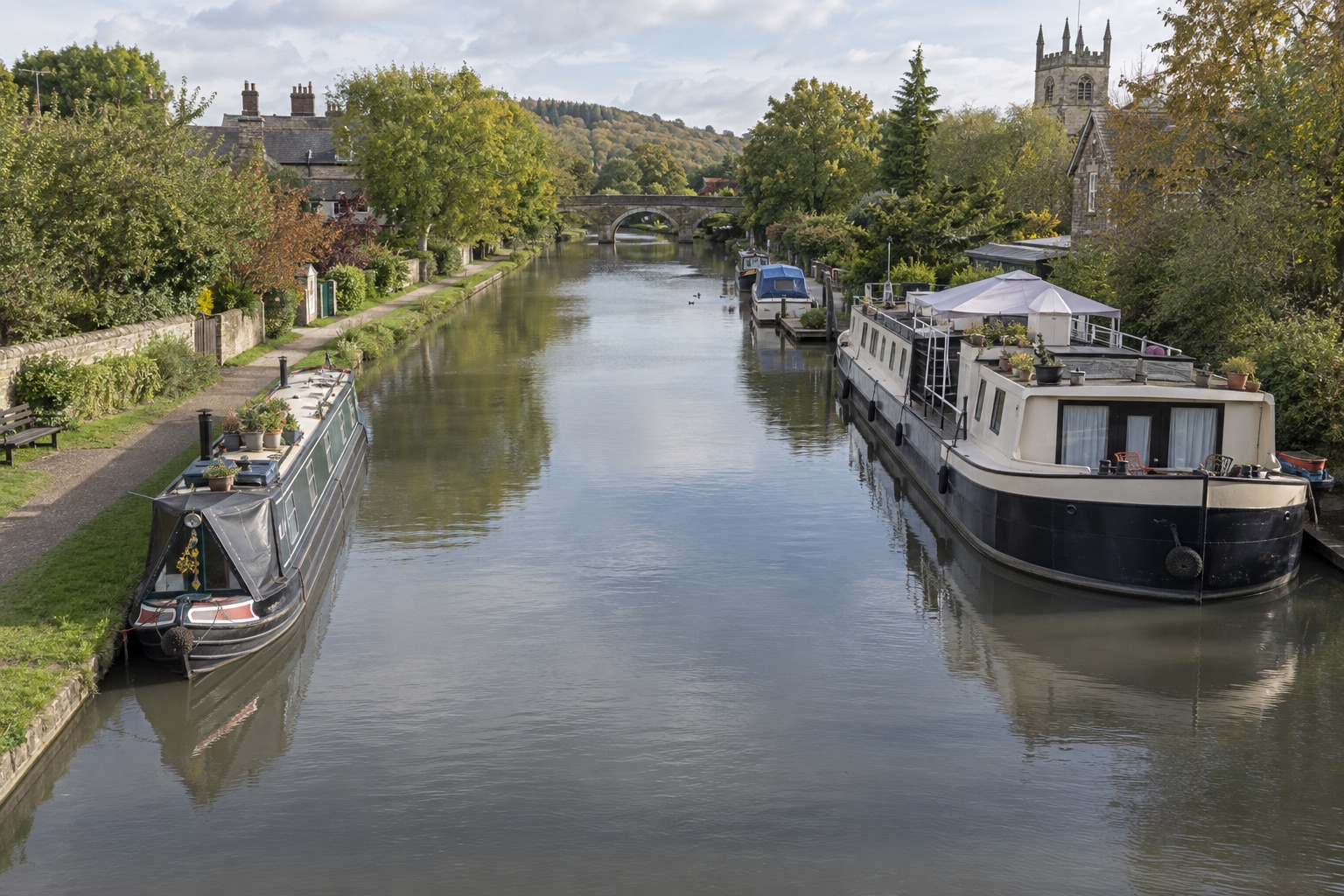
How wide is a narrowboat?
The Canal & River Trust describes a typical steel narrowboat as about 6ft 10in (2.1m) wide. Beam means the boat's width, not the usable width inside the cabin. A wide beam is wider than a narrowboat, but the name does not specify one standard measurement. Check the actual dimensions of the individual boat. A narrowboat's width alone does not guarantee it can use a route: length, draught, headroom and the shape of the cabin matter too.
Where can a wide beam go?
A wide beam cannot use the narrow canal network as a through route. The Trust says waterways marked narrow are unsuitable for boats wider than 2.13m (7ft). Even a broad waterway needs checking from end to end, including its connecting branches. Navigable depth may reduce towards the bank, so fitting through a lock does not prove there is room to pass another boat or moor safely. Check current restrictions as well as published dimensions.
What changes when you moor?
Ask operators about a berth for the exact boat, rather than asking only whether they accept wide beams. Give its length, beam and draught, and confirm access, services and the price in writing. A wider hull occupies more of the channel when moored. Check passing room and sight lines, especially on bends or opposite another boat. Mooring availability and any width-related licence charge belong in the budget before you choose a boat.
Compare the practical trade-offs
Start with the places you want to go. Then decide how much of the extra cabin space you would actually use.
| Your priority | Narrowboat | Wide beam |
|---|---|---|
| Cruising range | Can use narrow waterways when all the boat's dimensions fit. | Needs a connected route of suitable broad waterways. |
| Cabin layout | Try the walking space with cupboards and doors open. | Check that the extra width solves a real need in your daily routine. |
| A place to stop | Confirm the berth for the boat's length and draught. | Confirm those dimensions plus passing room and width restrictions. |
| Handling | Arrange a supervised trial rather than relying on a floor plan. | Include turning, approaching a berth and handling wind in the trial. |
For costs, put two actual boats side by side on paper. Get current quotes for the licence, mooring, insurance and any planned yard work. Ask what each quote includes. A general claim that one type is cheaper will not tell you what those particular boats will cost to keep.
Work through a route example
Suppose you are considering a boat advertised as 10ft wide, about 3.05m. One stretch on your planned journey is marked narrow in the Trust's dimensions list. That is enough to rule out that continuous water route for this boat, even if the marina at each end has room for it.
Next check whether a different suitable water route exists. If it does not, investigate a specialist road move before buying. A road move brings its own arrangements at both ends, so use our guide to moving between disconnected waterways to prepare questions for a mover.
Cut Along's map can help you look around the area. Its route network is still being verified. The journey planner can flag recorded published beam limits against the width saved in My boat, but it does not check length, draught, headroom or passage permissions. Missing width limits do not confirm clearance. A line drawn on the map is not confirmation that a boat will fit. Follow our steps for checking a wide-beam route against the responsible authority's information.
Take a checklist to a viewing
- Write down the boat's measured beam, length, draught and headroom. Ask where the figures came from and have uncertainties checked.
- List the waterways and connecting branches you actually expect to use. Check the tightest restrictions along the whole journey.
- Confirm a suitable berth if you need one. Do not assume a mooring mentioned in an advert transfers with the sale.
- Try the cabin as a living space: open doors, stand at the cooker and check access around beds and storage.
- Arrange a supervised handling trial. If you are new to boating, get instruction before making your own judgement about manoeuvring.
- Keep the budget and condition checks separate from the layout decision. Use our used-boat buying checklist for the next stage.
The right choice is the boat that works for your intended cruising and daily life. More floor space is useful only if the boat can reach, use and leave the places you need.
Before you go
- Record the actual beam, length, draught and headroom
- Check the whole route and a suitable berth
- Compare itemised costs and try the boat afloat